Duke University
Department of Population Health Sciences

Research to Eliminate GlobAL Cancer Disparities

Led by Dr. Tomi Akinyemiju, we use high-quality data and rigorous analysis to understand why cancer outcomes differ between communities — and to find what actually closes the gap.

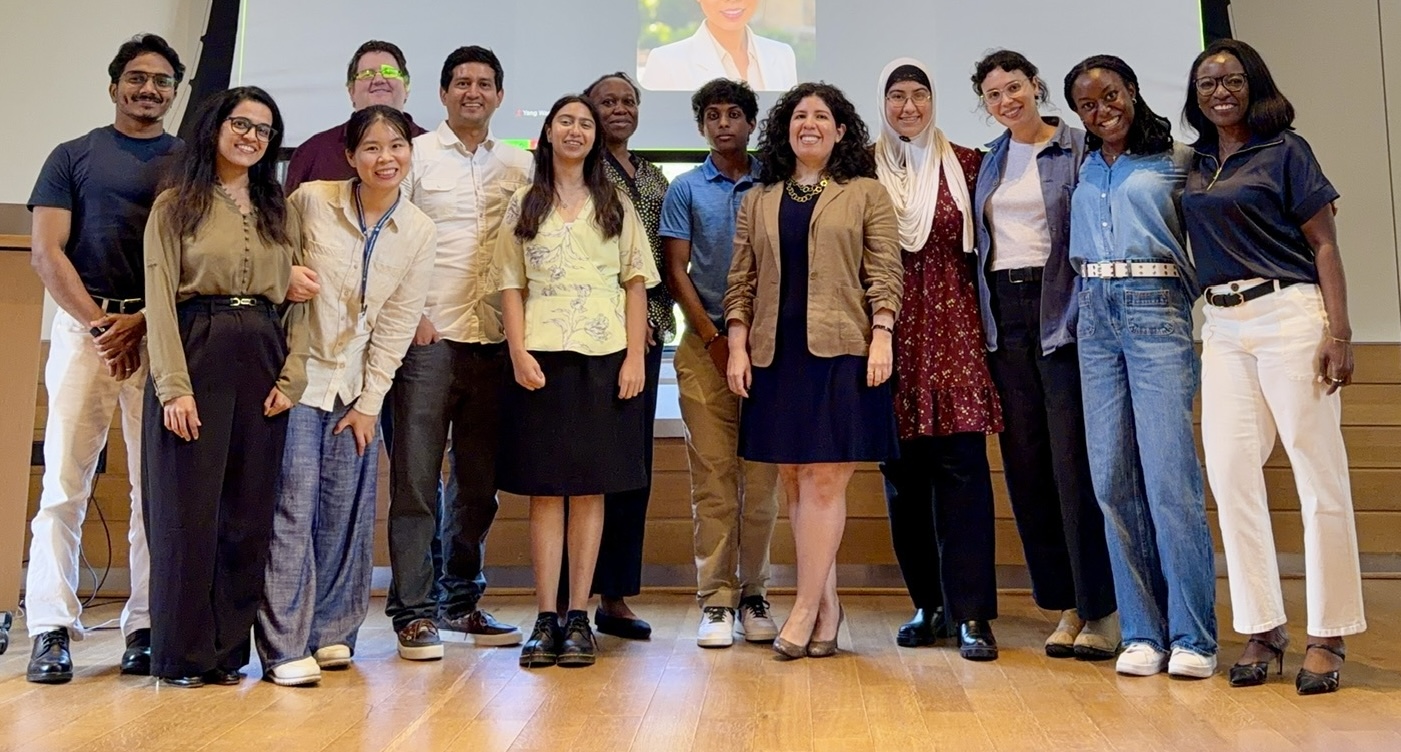
The REGAL research team gathered in an auditorium
Peer-Reviewed Publications
183Peer-Reviewed Publications
Federal Grant Funding
$12M+Federal Grant Funding
Study Participants
4,500Study Participants
Community Partnership
12 yrsCommunity Partnership

Our Core Pillars

Bridging the gap between science and community health. Our legacy is not simply that we studied and documented unequal cancer outcomes — it is that we helped change them.

Biology

Biological Basis of Cancer

We study how everyday factors like diet and activity shape biological pathways — metabolism, inflammation, epigenetics — that make some cancers more aggressive.

What this means for you:

Understanding these risk factors helps us build screening and prevention that fits your body, not an average.

Care Access

Access to Healthcare

We map five dimensions of access — affordability, availability, accessibility, accommodation and acceptability — and trace how each affects treatment and survival.

What this means for you:

We pinpoint why some neighborhoods lack care and push for the clinics, transport and coverage that fix it.

Social Factors

Systemic Racism

We measure how residential segregation and racial discrimination become embodied — influencing risk factors, tumor biology and survival among Black Americans.

What this means for you:

Our data gives policymakers and health systems the evidence to be held accountable for treating every patient equally.

Dr. Tomi Akinyemiju reviewing genomic data in the laboratory

Active Study Spotlight

MEND

Breast Cancer

MEND asks why breast cancer is often found later and behaves more aggressively in Black women, linking metabolic health, neighborhood conditions and tumor biology.

Recent Publications

Cancer Causes Control2026

Self-collected biospecimen consent and return rates in a population-based study among women with ovarian cancer: insights from the ORCHiD study

View on PubMed

JCO Oncol Pract2026

Survival Disparities in Patients With Metastatic Breast Cancer

View on PubMed

Nat Hum Behav2025

A latent measure of cultural racism and its association with US mortality and life expectancy

View on PubMed

From the REGAL Community

REGAL Newsletters

Our annual newsletter shares the people, partnerships, and research milestones behind our work toward more equitable cancer outcomes.

2026

2026 REGAL Newsletter

Our next annual newsletter is in the works — follow our latest studies, community events, and team milestones. Check back soon for the full edition.

Coming soon

2025

2025 REGAL Newsletter

Meet the people, partnerships, and research milestones that moved our work toward more equitable cancer outcomes in 2025.

Download the Newsletter